A sensor that turns lights on when someone walks in can still fail a quiet reading or meeting scenario. Recent connected-lighting work makes the case for collecting better information at the point of use, but engineering value appears only when the information survives the path from device to decision to actual luminaire behavior. That path needs a defined installation context, a named control owner, and a record of what each component is known to do.
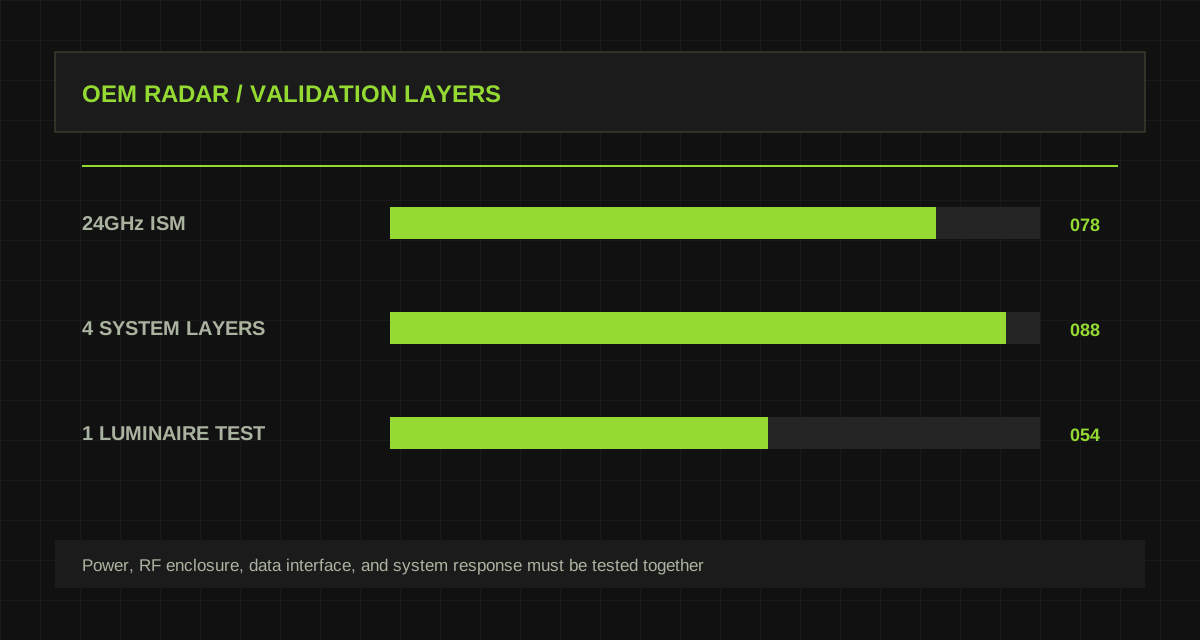
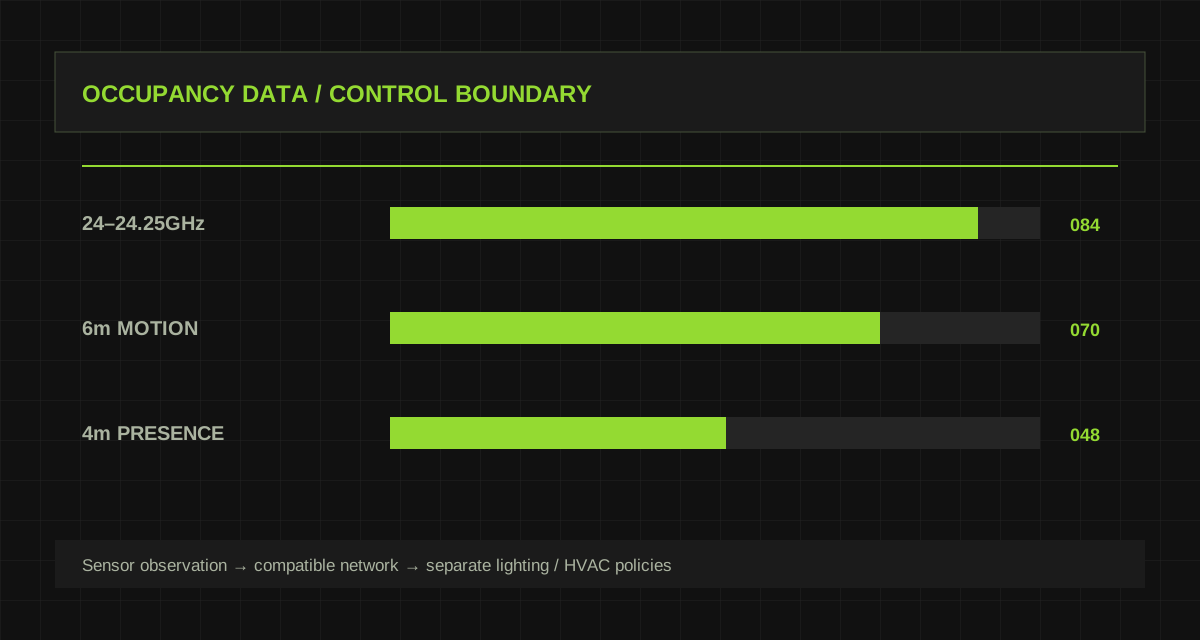
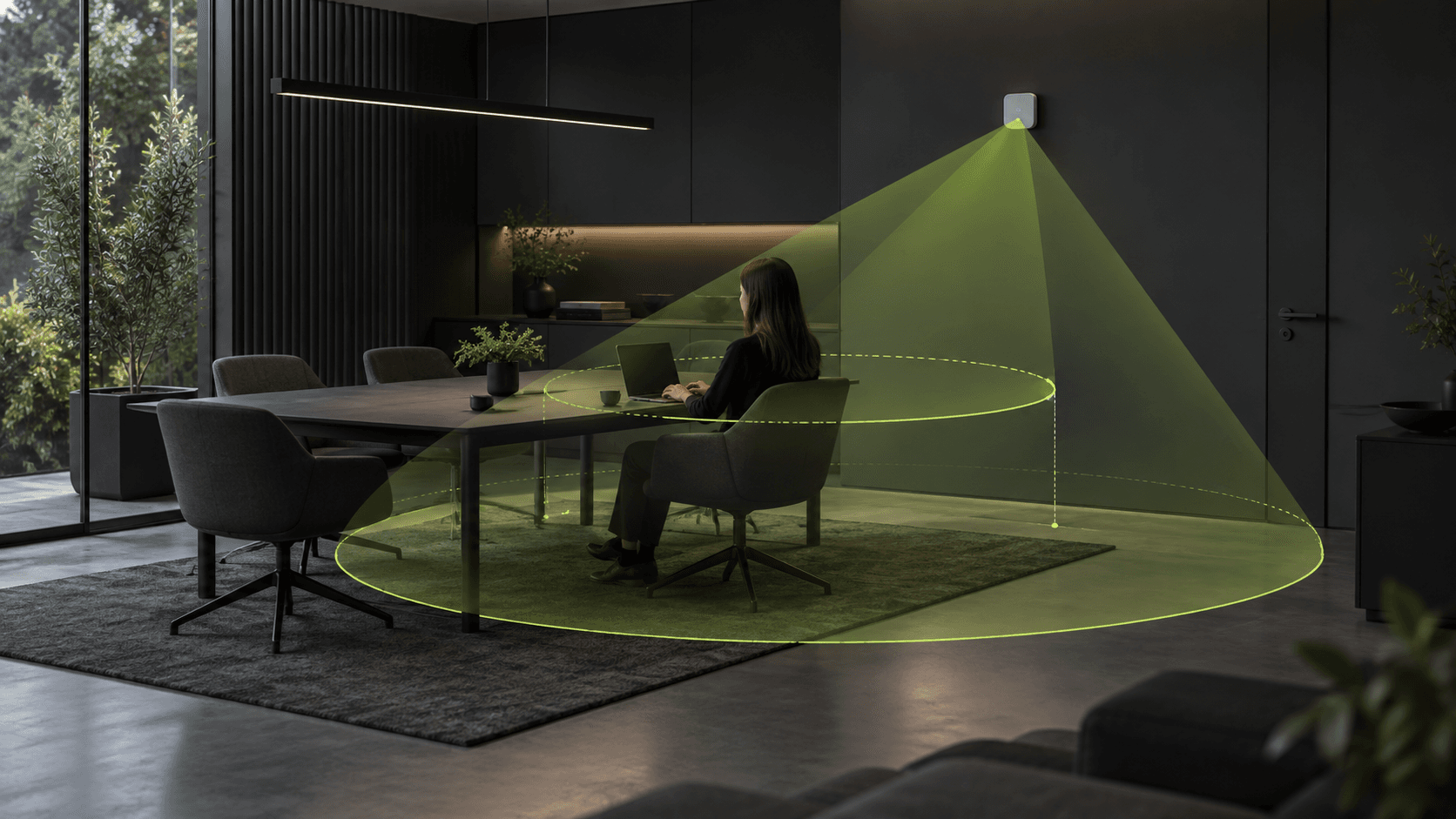
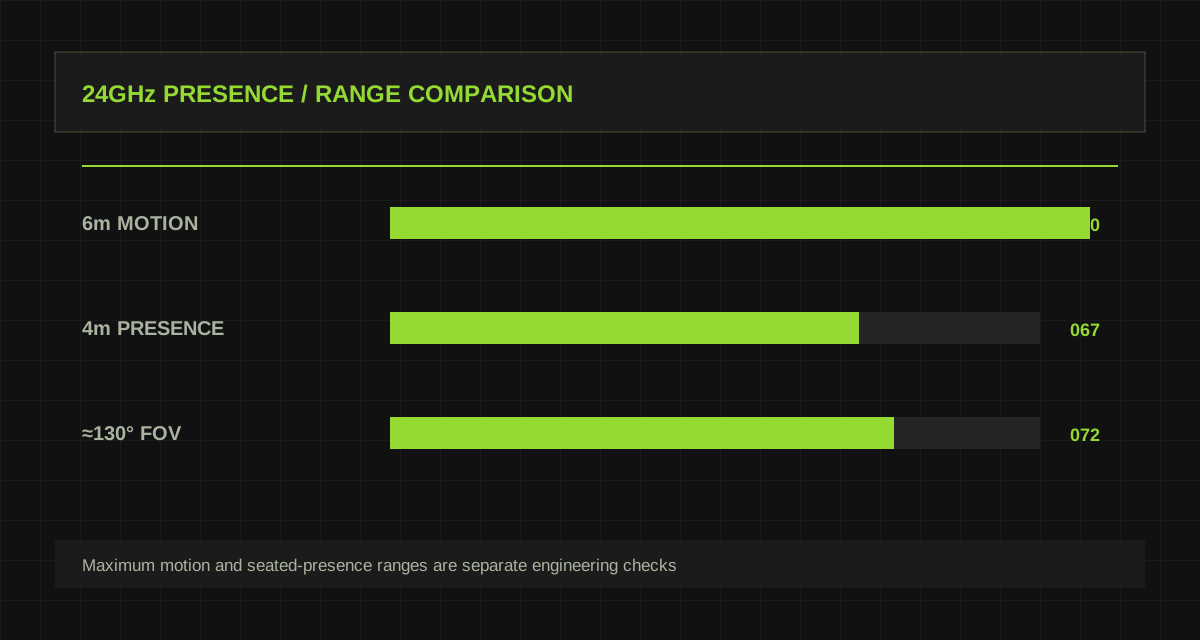
This article uses the current product record as a practical starting point. M3 is specified for the 24–24.25GHz ISM band, with up to 6m motion detection, up to 4m presence detection, approximately 130° horizontal field of view, and wall mounting at 1.5–2m. It also lists Bluetooth 5.0 and a CR2477 battery with a nominal three-year life. The selection method is deliberately conservative: use published parameters to constrain a design, and use documented integration information plus site testing to validate every behavior that is not explicitly stated.
The engineering method is discussed against real models. Diagrammed examples and conceptual connections name their operating boundaries. Confirm product parameters against the current model, variant, and applicable technical documentation.
Why weak movement changes the problem
A sensor that turns lights on when someone walks in can still fail a quiet reading or meeting scenario. A project should begin with the operational question rather than a feature name. Identify the people, equipment, light level, response time, and maintenance outcome that the space needs. This makes it possible to distinguish a useful requirement from a marketing label.
Maximum motion range cannot be reused as a promise of seated-presence coverage. Furniture, geometry, mounting direction, reflections, and the user’s position can alter results in every real room. Treat this distinction as a design input. It prevents a system diagram from assigning responsibilities to a product before its actual interface, documented function, and configuration route have been verified.
Keep the evidence attached to the decision that it supports. Record the model and variant, physical location, configuration revision, wiring or network condition, date, observer, measured result, and any exception. When a result changes after a setting, installation, or firmware change, preserve both records. This gives the next engineer a way to distinguish a changed requirement from a changed system response.
Read the two M3 range figures correctly
M3 is specified for the 24–24.25GHz ISM band, with up to 6m motion detection, up to 4m presence detection, approximately 130° horizontal field of view, and wall mounting at 1.5–2m. It also lists Bluetooth 5.0 and a CR2477 battery with a nominal three-year life. Read each field together with its condition and unit. A current setting, voltage window, maximum mounting height, standby figure, or IP rating has meaning only in the context of the specific product variant and installed assembly.
Create a short “known / confirm / test” table for the project. Published data belongs in known; exact firmware, wiring, protocol, mounting construction, load, and operating condition belong in confirm or test until evidence moves them into the known column.
Keep the evidence attached to the decision that it supports. Record the model and variant, physical location, configuration revision, wiring or network condition, date, observer, measured result, and any exception. When a result changes after a setting, installation, or firmware change, preserve both records. This gives the next engineer a way to distinguish a changed requirement from a changed system response.
Plan around people, seats, and obstructions
Mark the seats that need reliable quiet-presence coverage, place them within the intended presence zone, then document doors, glass, tall furniture, moving curtains, and adjacent paths before choosing the final mounting point. Keep the first test deliberately small, with documented versions and a stable environment. A controlled pilot produces evidence that can be understood later; a full installation with several simultaneous changes often produces symptoms without a clear cause.
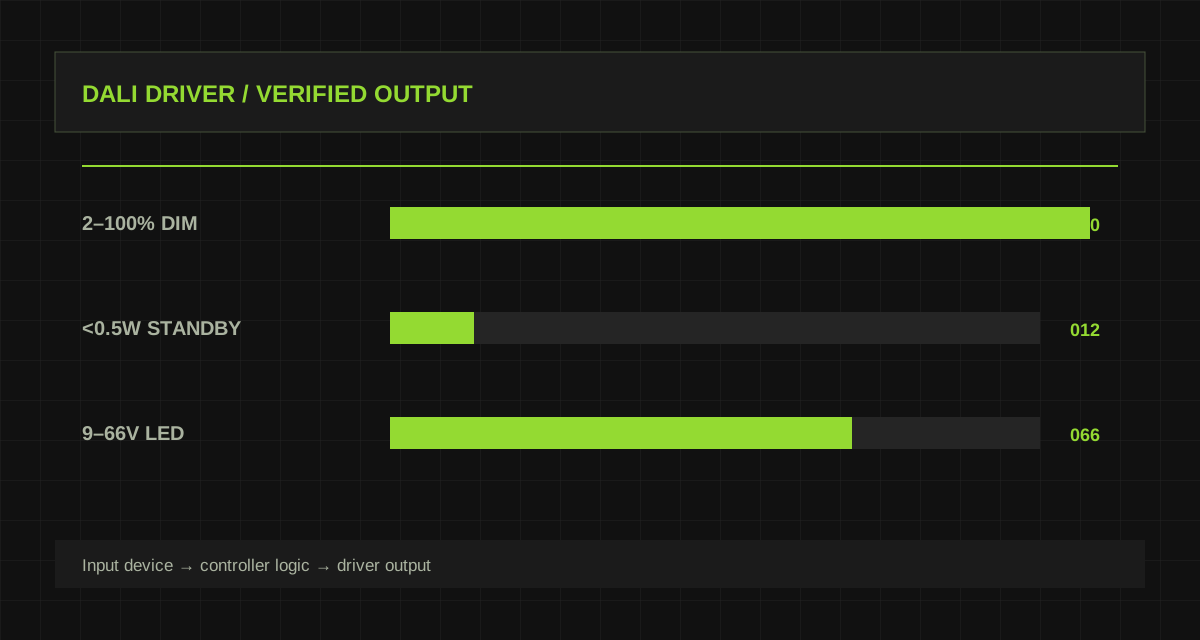
For every input, write the expected result and the owner of the decision. A sensor can report an observation, a controller can apply policy, and a driver or other actuator can execute a result. When two devices can issue conflicting decisions, define priority before the system reaches site.
Keep the evidence attached to the decision that it supports. Record the model and variant, physical location, configuration revision, wiring or network condition, date, observer, measured result, and any exception. When a result changes after a setting, installation, or firmware change, preserve both records. This gives the next engineer a way to distinguish a changed requirement from a changed system response.
Treat missed detections and false triggers separately
Run separate tests for entry, walking, sitting still, typing, reading, turning, leaving, and an empty room with environmental disturbances. Test beyond the configured vacancy delay. Run the scenarios in a fixed order and keep raw observations where possible: measured light, input power, device status, event time, configuration revision, and room condition. One convincing demonstration is not an acceptance method; repeatability is.
Fault behavior deserves the same attention as normal behavior. The system should state whether information is current, stale, missing, or invalid, then apply the approved fallback. A communications failure must not silently masquerade as a normal vacant or healthy state.
Keep the evidence attached to the decision that it supports. Record the model and variant, physical location, configuration revision, wiring or network condition, date, observer, measured result, and any exception. When a result changes after a setting, installation, or firmware change, preserve both records. This gives the next engineer a way to distinguish a changed requirement from a changed system response.
Connect sensor events to room-state logic
Use results to refine the zone, operating policy, and maintenance plan rather than to force a single universal setting. Installation changes, furnished spaces, varying daylight, user behavior, and electrical conditions often matter more than a nominal figure quoted without its test boundary.
Where an external system is involved, preserve an explicit interface contract: device and firmware identification, signal or data meaning, addressing, timeout rule, safety boundary, and recovery behavior. That contract is what keeps a working pilot from becoming an opaque deployment.
Keep the evidence attached to the decision that it supports. Record the model and variant, physical location, configuration revision, wiring or network condition, date, observer, measured result, and any exception. When a result changes after a setting, installation, or firmware change, preserve both records. This gives the next engineer a way to distinguish a changed requirement from a changed system response.
Accept the installation with repeatable scenarios
The useful handover is a documented sensing plan with critical-seat distances, installation orientation, configuration version, and repeatable occupied and empty-room evidence. Handover should include drawings, configuration exports, parameter selections, tested scenarios, the original site conditions, and a short sequence a technician can repeat after replacement or refurbishment.
The purpose of the document is not to claim that technology eliminates engineering judgement. It is to make that judgement visible, testable, and easier to carry forward as the project, the building, and the installed product set evolve.
Keep the evidence attached to the decision that it supports. Record the model and variant, physical location, configuration revision, wiring or network condition, date, observer, measured result, and any exception. When a result changes after a setting, installation, or firmware change, preserve both records. This gives the next engineer a way to distinguish a changed requirement from a changed system response.
Products and key parameters
These fields come directly from the current product library. Open the product page to confirm complete parameters and the applicable product record.
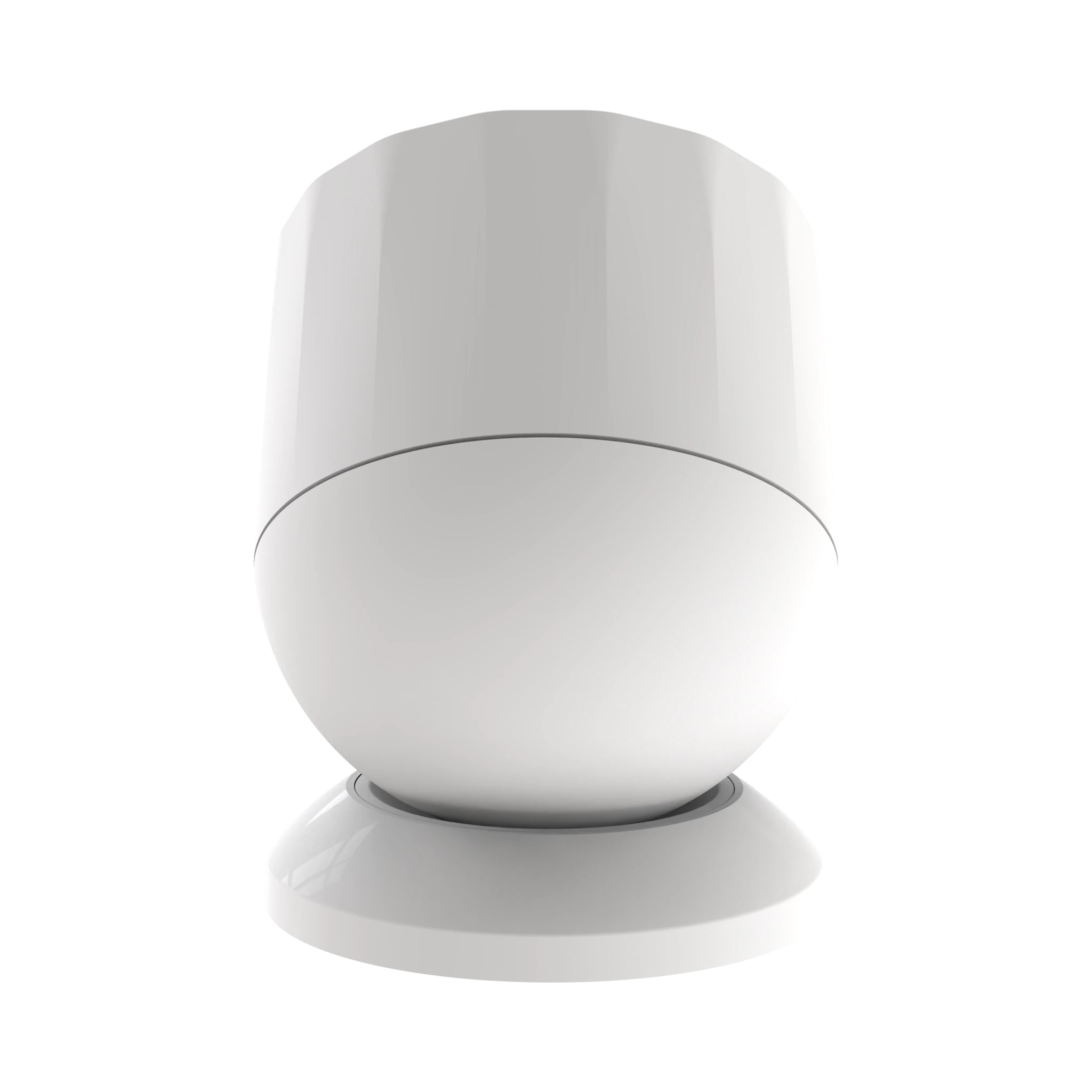 Standalone SensorsM3View full product parameters
- Power supply
- Lithium manganese CR2477 button battery (original battery can be purchased at the Mindray JD.com/Tmall flagship store)
- Battery life
- 3 years
- Installation height
- Wall installation 1.5-2m
- Wireless protocol
- Bluetooth 5.0
- Radar frequency
- 24G Hz-24.25G Hz ISM band
- Detection distance
- Motion sensing 6m (maximum), presence sensing 4m (maximum)
- Detection angle
- Horizontal FOV about 130°
References and editorial note
Sources were reviewed on 2026-09-07. Recent industry sources and basic technical references are listed separately. The article is original engineering commentary grounded in the current product record, not a translation of the cited source. Any calculation or recommendation does not represent completed product interoperability testing.